


Jewish Disability Awareness, Acceptance, and Inclusion Month (JDAIM) is a unified national initiative during the month of February to raise disability awareness and support efforts to foster inclusion in Jewish communities worldwide.
* “Paddy wagon”, a slang term for a police van, is used in the video without the intention to cause harm. This term has historically been linked with Irish immigrants in a way that has been deemed derogatory. At Jewish Learning Venture, we are always seeking to educate ourselves and offer repair when we may have caused harm, even unintentionally. When we know better, we do better.
Make accessibility a priority in 2026.
Too often, despite the very best of intentions, accessibility is treated as an afterthought by leadership and programming staff. We get it, everyone’s working hard and we’re not trying to call you out. We’re trying to call you IN to the work of accessibility. Let’s commit to taking some small, but meaningful steps to construct a Jewish community for all of us, regardless of disability, as an important organizational value year-round, not just in February.
- Invite a local Philly-based speaker with the lived experience of disability. Use our resource list here or email ebeser@jewishlearningventure.org for connections.
- Preach or teach about accessibility from the pulpit. Here’s a source sheet to spark conversation in your community.
Read our full accessibility guidelines for congregations, schools, and community organizations.
Creating Neurodiversity-Affirming Learning Cohorts
Our “Creating Neurodiversity-Affirming Learning Cohorts” open to Jewish educators or folks who are interested in becoming Jewish educators who identify as neurodivergent to uplift their neurodivergent “superpowers” and create a community of practice focusing on the challenges that come from working in environments that don’t yet support neurodivergent adults. Another cohort is for education directors of any neurotype who want to provide an environment where their neurodivergent staff will be successful and supported.
Contact Julia for more information.
Hear what cohort participants have to say:
I was able to get some really good perspective on neurodiversity in general, and reflect on my own assumptions and expectations.
Supporting neurodivergent staff and students has the potential to create a culture of supporting and affirming needs of anyone who enters our program with any type of neurodiversity, and welcomes potential teachers into the school who might otherwise feel they can’t teach or don’t belong.
Lesson Plans
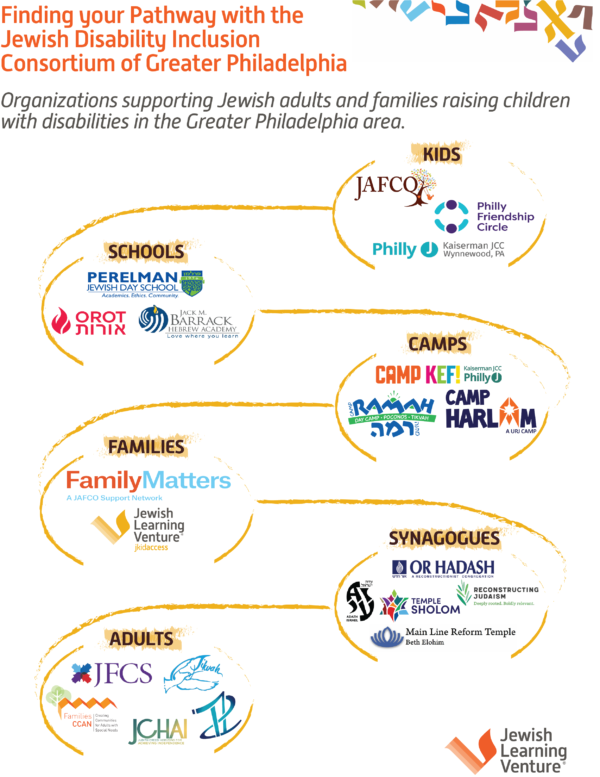
Free downloadable lessons for JDAIM or any time of the year! From the Jewish Disability Inclusion Consortium, these lesson plans use Jewish values to help students learn about the importance of disability inclusion.
- JDAIM Overview Lesson Plans
- Jewish Values-based JDAIM Lesson Plans
- Adam Yihidi Nivrah 1 (PreK)
- Adam Yihidi Nivrah 2 (PreK–Kindergarten)
- B’tzelem Eloheim (PreK–Kindergarten)
- In My Kehillah (K–2nd grade)
- Purim – Being Seen (K–3rd Grade)
- B’tzelem Eloheim (Grades 1–3)
- Adam yehidi yivra (Grades 1–3)
- In My Kehillah (Grades 3–6)
- V’ahavta l’reiacha kamocha (Grades 4–5)
- Purim –Being Seen (Grades 4–6)
- Tzedek-Justice (Grades 4–6)
- Kol Yisrael Araveem Zeh B’zeh (Grades 6–7)
- Purim–Inclusion (Grades 7+)
- Tzedek-Justice (Grades 7+)
- Access Earth (Grades 8+)
Disability Resources
- Visit jkidaccess for resources, activities, and more!
- Subscribe here for the new Jewish Disability Inclusion News, a forum for diverse voices at the intersection of disability inclusion and Jewish life
- Gabrielle Kaplan-Mayer’s Blessing for Inclusion
- jkidphilly JDAIM Coloring Book
- ELI Talks Discussion Guide
- URJ Disabilities Inclusion Learning Center
- Hineinu Guide to Creating Inclusive Communities
- Matan: Resources about Disability Inclusion for Educators
- Available Disability Inclusion speakers
- Synagogue Welcoming Card
- Guide: “Help Make Purim Accessible”
- Shutaf Inclusion Guide
- Kaddish for People with Disabilities by Wendy Elliott-Vandivier